- Armenia - Acopian Center for the Environment - American University of Armenia
- USA - University of Montana and University of California
- Argentina - Universidad Nacional de La Pamba
- Turkey - Adnan Menderes University
- Georgia - Institute of Botany
- Romania - Institute Of Biological Research
- Hungary -Insttute of Ecology and Botany
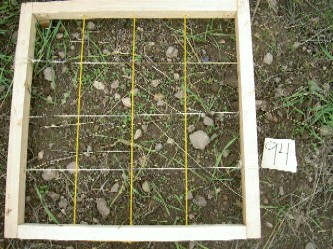
Studying germination in the native and non-native range of a species can provide unique insights into processes of range expansion and adaptation; however, traits related to germination have rarely been compared between native and nonnative populations. In a series of common garden experiments, we explored whether differences in the seasonality of precipitation, specifically, summer drought vs summer rain, and the amount and variation of annual and seasonal precipitation affect the germination responses of populations of an annual ruderal plant, Centaurea solstitialis, from its native range and from two non-native regions with different climates. Introduced species are one of the greatest global threats to biodiversity, second only to habitat destruction. Centaurea solstitialis is a invasive plant native to the Caucasus region that has been introduced and spreading rapidly in many parts of the world. To test the impacts of soil microbes, insects, disturbance, and competition on the performance of Centaurea solstitialis, we established field experiments in sites spanning both native and introduced regions of Centaurea, including Armenia, the Republic of Georgia, Turkey, Argentina, Chile, and California We found that seeds from all native populations, irrespective of the precipitation seasonality of the region in which they occurred, and non-native populations from regions with dry summers displayed similarly high germination proportions and rates. In contrast, genotypes from the non-native region with predominantly summer rain exhibited much lower germination fractions and rates. To investigate the potential effects of seasonality of precipitation on C. solstitialis germination, we conducted three successive seed collections from populations occurring in regions exepte France, Crete and Armenia, where seeds were pooled within populationsAlso, percent germination was strongly correlated with variation in precipitation in winter, the season that follows germination for C. solstitialis. Specifically, germination was lower for native and non-native populations experiencing greater variation in winter precipitation. This correlation, however, was greatly influenced by the non-native region with summer rain, which also exhibited the greatest variation in winter precipitation among studied regions. These results suggest that rather than general climatic patterns, the degree of risk experienced at early developmental stages could exert an important control over the germination strategy of C. solstitialis populations in both native and non-native ranges. Also, these findings reveal a largely unique germination response in C. solstitialis genotypes growing in the non-native region with summer rain and high variation in winter precipitation. Our work raises the possibility that rapid adaptive changes in germination strategies may contribute to the success of globally distributed invaders.
More about “Germination responses of an invasive species in native and non-native ranges” You can find Oikos Volume 118 Issue 4, Pages 529 - 538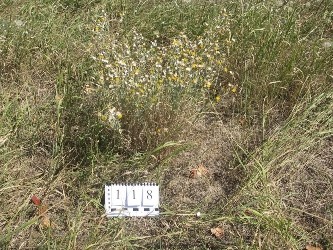
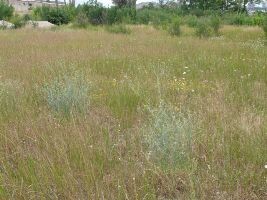
General view of the experimental field in Armenia