Monitoring dissolved oxygen in the Hrazdan River
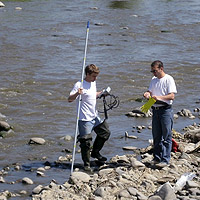 The Hrazdan River is the primary waterway in Armenia and country’s second largest river. While the Hrazdan receives effluent from various agricultural, commercial, industrial, and residential sources, it is most significantly impacted by the discharge of Yerevan’s almost entirely untreated wastewater. The effects of this poorly treated wastewater are evident through a variety of water quality indicators, most notably through drastic drops in dissolved oxygen (DO) levels downstream of the city.
The aim of this study was to quantify the effect Yerevan’s wastewater discharge have on health of the Hrazdan River by monitoring dissolved oxygen levels in an 18-km stretch that began two kilometers upstream of the wastewater outfalls.
The Hrazdan River is the primary waterway in Armenia and country’s second largest river. While the Hrazdan receives effluent from various agricultural, commercial, industrial, and residential sources, it is most significantly impacted by the discharge of Yerevan’s almost entirely untreated wastewater. The effects of this poorly treated wastewater are evident through a variety of water quality indicators, most notably through drastic drops in dissolved oxygen (DO) levels downstream of the city.
The aim of this study was to quantify the effect Yerevan’s wastewater discharge have on health of the Hrazdan River by monitoring dissolved oxygen levels in an 18-km stretch that began two kilometers upstream of the wastewater outfalls.
Click here to learn more.
Winter Feeding of Water birds on Yerevan Lake
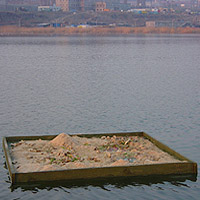 Winter is the most unfavorable period for birds, especially for water birds. Low temperatures, difficult access to food, and short duration of daylight hours serve as the basic negative factors in this period for the vital activity of birds. In addition to natural difficulties, ducks in Armenia also bear anthropogenic influences – among them the construction of on-shore reservoirs, hunting, and poaching out of the hunting season.
A large number of wild ducks gather on Yerevan Lake. According to the winter water bird counting done by specialists on Lake Sevan and Ararat valley, comparatively fewer wild ducks are left in these places, because they are constantly troubled by fishing boats on Lake Sevan and they are harassed and shot by hunters and poachers in Ararat valley.
Winter is the most unfavorable period for birds, especially for water birds. Low temperatures, difficult access to food, and short duration of daylight hours serve as the basic negative factors in this period for the vital activity of birds. In addition to natural difficulties, ducks in Armenia also bear anthropogenic influences – among them the construction of on-shore reservoirs, hunting, and poaching out of the hunting season.
A large number of wild ducks gather on Yerevan Lake. According to the winter water bird counting done by specialists on Lake Sevan and Ararat valley, comparatively fewer wild ducks are left in these places, because they are constantly troubled by fishing boats on Lake Sevan and they are harassed and shot by hunters and poachers in Ararat valley.
Click here to learn more.
Invasive species in native and non-native ranges
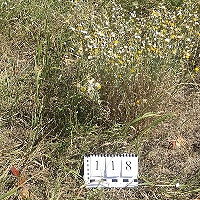 Studying germination in the native and non-native range of a species can provide unique insights into processes of range expansion and adaptation; however, traits related to germination have rarely been compared between native and nonnative populations. Introduced species are one of the greatest global threats to biodiversity, second only to habitat destruction. Centaurea solstitialis is a invasive plant native to the Caucasus region that has been introduced and spreading rapidly in many parts of the world. To test the impacts of soil microbes, insects, disturbance, and competition on the performance of Centaurea solstitialis, we established field experiments in sites spanning both native and introduced regions of Centaurea, including Armenia, the Republic of Georgia, Turkey, Argentina, Chile, and California.
Click here to learn more.
First GIS and Remote Sensing Conference in Armenia
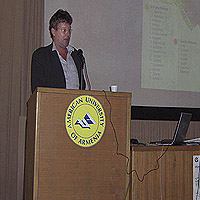 The first conference on the use of GIS and Remote Sensing in Armenia, which took place at the American University of Armenia on December 16, was a big success. Geographic Information Systems (GIS) are highly sophisticated computer programs which are used to analyze and store spatial data, produce maps, and make prognoses. They are being applied in a wide range of sectors and are state-of-the-art technology used worldwide. The conference was jointly organized by the Acopian Center for the Environment and Geocom Ltc. It attracted more than 40 participants from private GIS companies, state agencies, universities, major NGOs and international organizations. The presentations covered a wide range of important subjects, such as the use of GIS in the field of forest management, disaster management, water and waste water management, and geochemical pollution monitoring. It was the first time that GIS stakeholders from Armenia met over such an event and it was a great opportunity for improved cooperation among institutions working in the same field. All participants agreed that the conference shall be repeated in the following years.
Click here to learn more.
Advanced GIS Training for Health Professionals
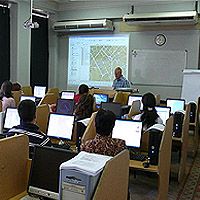 An advanced ArcGIS training for fifteen representatives from a total of eight health organizations in Armenia took place from May 11-14, 2009 at the computer lab of the American University of Armenia (AUA). The advanced GIS training was subcontracted to The Acopian Center for the Environment by USAID Project NOVA in the frame of “GIS in Health Training and Workshop for the Armenian Organizations for policy formulation, datadriven decision-making, planning, monitoring and evaluation”. Training was conducted by Mr. Thomas Lyman, M.Ed., Senior GIS/GPS Specialist at the Acopian Center for the Environment and by Mr. Byron L. Crape, MSPH, PhD from the School of Public Health at AUA. They were assisted by Ms Meike Schaefer, M.Sc., GIS Specialist at the Acopian Center for the Environment, AUA, Mr Armen Asryan, MIS, from USAID project NOVA, and Ms. Anahit Bobikyan, translator.
Click here to learn more.
Saving the Armenian Gull
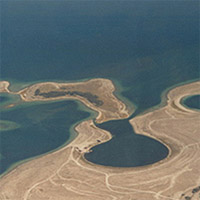 Armenian Gull breeds in lakes Sevan and Arpi in Armenia. At Lake Sevan it breeds in “Gull islands” which, as a result of constant water level lowering in the lake, joined the coast by the end of 1990-s, thus turning into a peninsula and has become open to predators and domestic cattle. Predators such as foxes and stray dogs caused much harm to Gulls by eating their eggs and nestlings. As for domestic animals, they trampled down the eggs wandering around the island. The island became open to tourists who frightened the birds and raised panic among them. That harmful circumstance, as it may seem at first sight, had the most fatal consequences: eggs were getting too cold during the first period of nesting and in the period of mass hatching the frightened birds were leaving their nests. The parents in the useless search of their nestlings were pecking the other lost nestlings to death.
Click here to learn more.
Endemic Wheats of Armenia
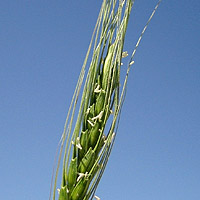 Armenia, although a small country, is very rich in wild relatives of cultivars, including the ancestors and donors of such important cultivated plants as bread cereals. The study of wild species of wheat, barley, goat grass, rye and others of the cereal crops represents a large practical interest. Progenitors of cultivars are often carriers of valuable attributes and features, such as, high drought and frost resistance, the ability to grow on relatively poor soils, and resistance to pests and disease. That is why wild relatives are valuable material for the selection of new varieties of cultivated plants. In addition to this, purely in practical terms, the study of wild relatives of cereal crops are of particular help in understanding the path by which many thousands of years ago the creation of the modern cultivated grasses from wild cereal crops took place, and in giving a more precise definition to the regions where the agricultural civilization arose. From that viewpoint the study of the history of domestic bread cereals helps to shed light not only on the history of agriculture but on the history of humans in a broad sense.
Click here to learn more.